Buyer guide
Appalachian Back Roads: Trucks and Jeeps for West Virginia and Eastern Kentucky
Low-range gearing, approach and breakover angles, turning circles and grade towing compared for Wrangler, Gladiator, Ram 1500, Power Wagon and Cherokee.
By the Great Lakes CDJR editors · Updated November 6, 2026 · 5 min read
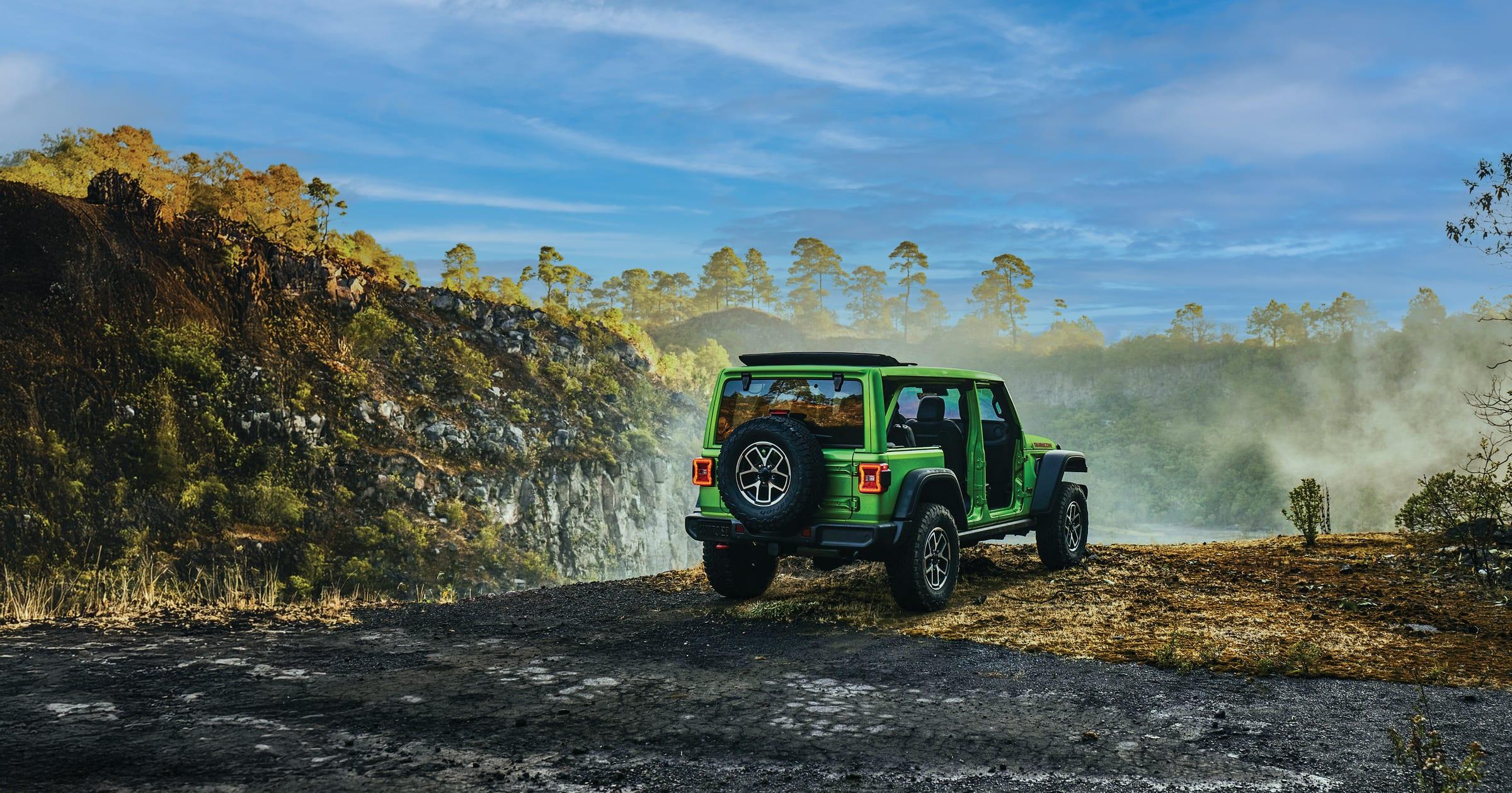
Driving in southern West Virginia and eastern Kentucky is its own discipline. Roads follow creeks up narrow hollows, climb ridges with no shoulder, and end at gravel driveways that tilt more than a boat ramp. Towns like Beckley, Logan, Pikeville, Hazard and Harlan sit in valleys, and the way out is almost always up.
A vehicle for that terrain has to do different work than a suburban commuter. It needs gearing for steep pitches, a body that fits on a single-lane road, clearance for washouts, and brakes and cooling that survive a long descent. This guide looks at five Jeep and Ram choices using their listed specs and starting prices before destination as of November 2026. Prices change, so confirm them before you shop.
What steep grades and hollows ask for
Three things separate a good mountain vehicle from a merely capable one.
Low-range gearing. A two-speed transfer case multiplies engine torque for slow, steep climbs and gives you control on the way down. Not every four-wheel-drive system has it. Full-time AWD systems tuned for pavement often do not.
Geometry. Approach angle matters when a driveway meets the road at a sharp lip. Breakover angle matters on crests and on ridges between ruts. Departure angle matters when you leave the same driveway in reverse.
Size. Many hollow roads have room for one vehicle plus a ditch. A narrower body and a tighter turning circle help more than people expect, especially when you have to back out around a bend.
The numbers side by side
| Vehicle | Low range or gearing | Approach / breakover / departure | Ground clearance | Turning circle |
|---|---|---|---|---|
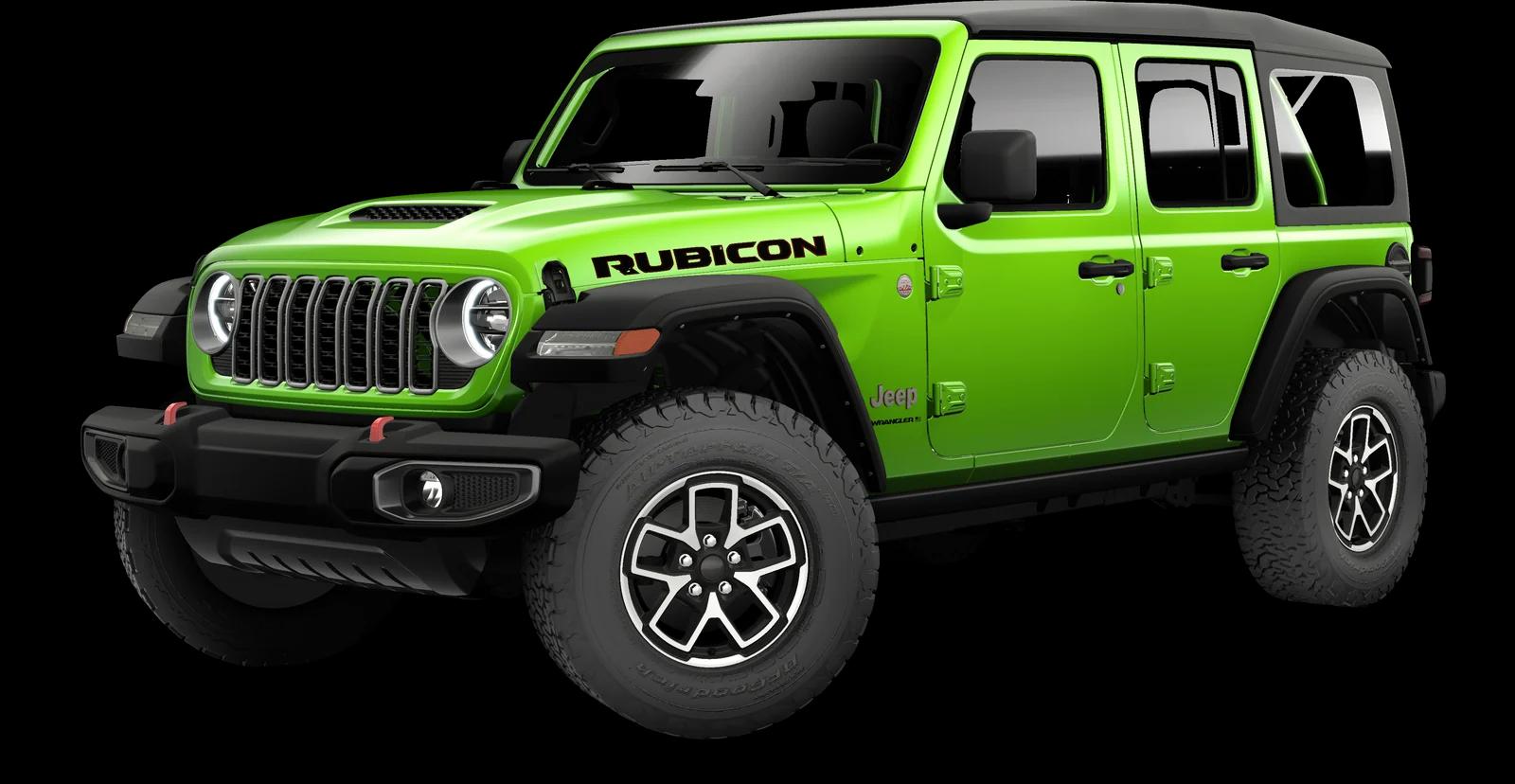
| Wrangler | 2.72:1 Command-Trac; 4.0:1 Rock-Trac on Rubicon | 41.4 to 47.4 / 20.3 to 32.4 / 35.9 to 40.4 degrees | 9.7 in to 12.9 in | 32.7 ft (2-door), 38.8 ft (4-door) |
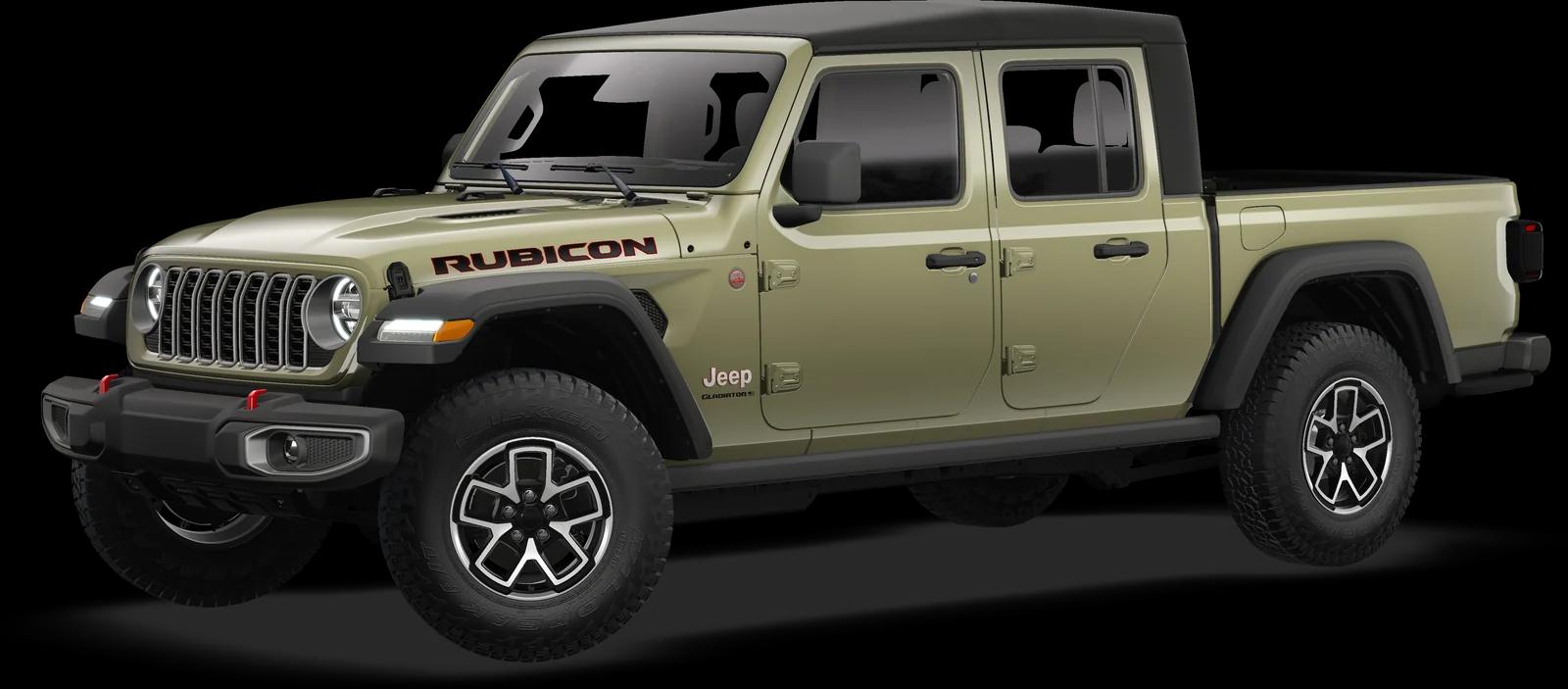
| Gladiator | 2.72:1 Command-Trac; 4.0:1 Rock-Trac on Rubicon | 40.8 to 46.7 / 18.4 to 23.3 / 25 to 26.7 degrees | 10 in to 12.9 in | 44.5 ft to 44.7 ft |
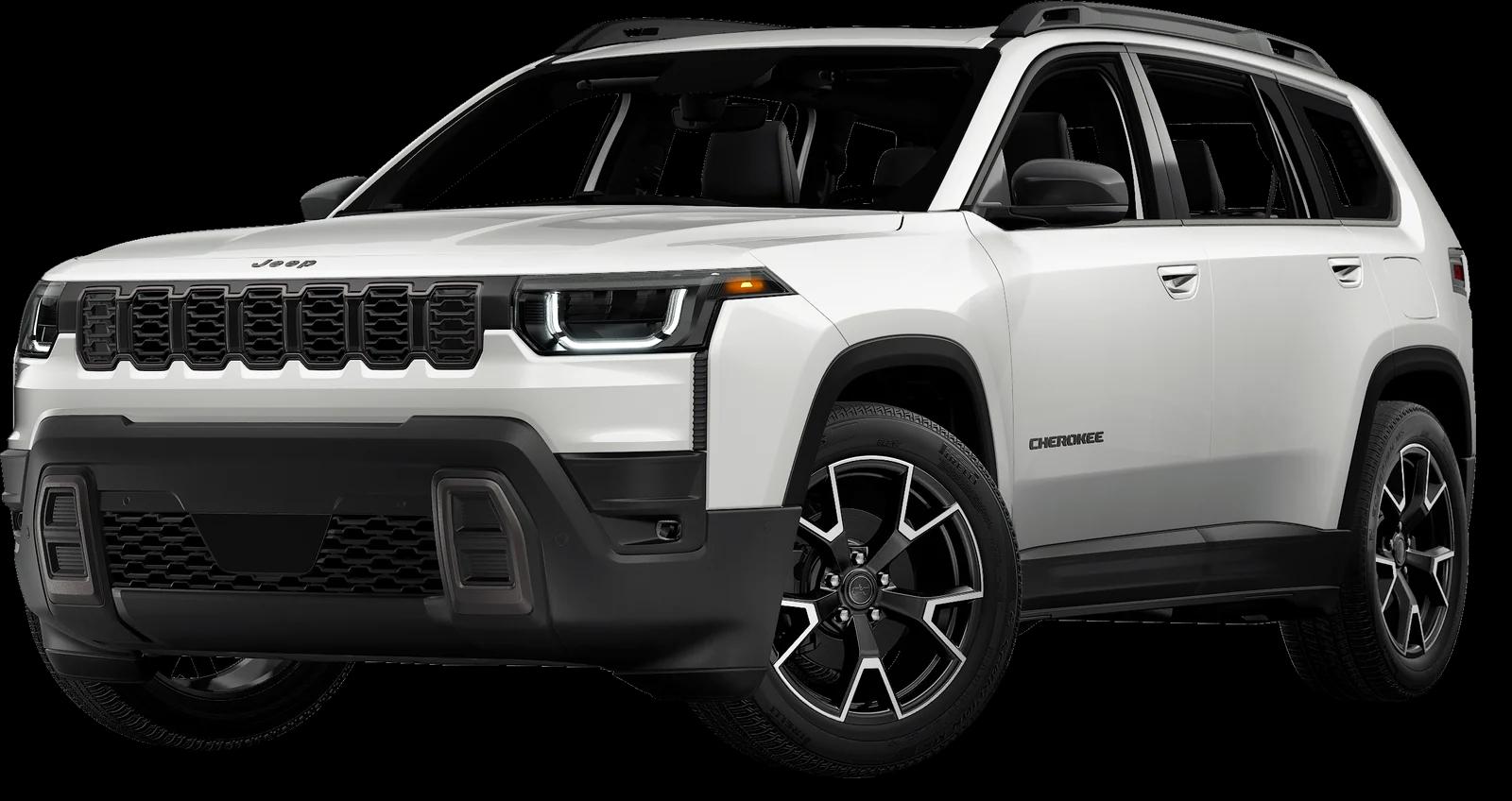
| Cherokee Trailhawk | 2.92:1 two-speed transfer unit | 28.8 / 21.9 / 31.8 degrees | 9.0 in | 40.3 ft |
| Ram 2500 Power Wagon (HEMI) | Locking front and rear differentials, 4.10 axle | 29.4 / 22.0 / 26.0 degrees | 14.2 in | Not listed |
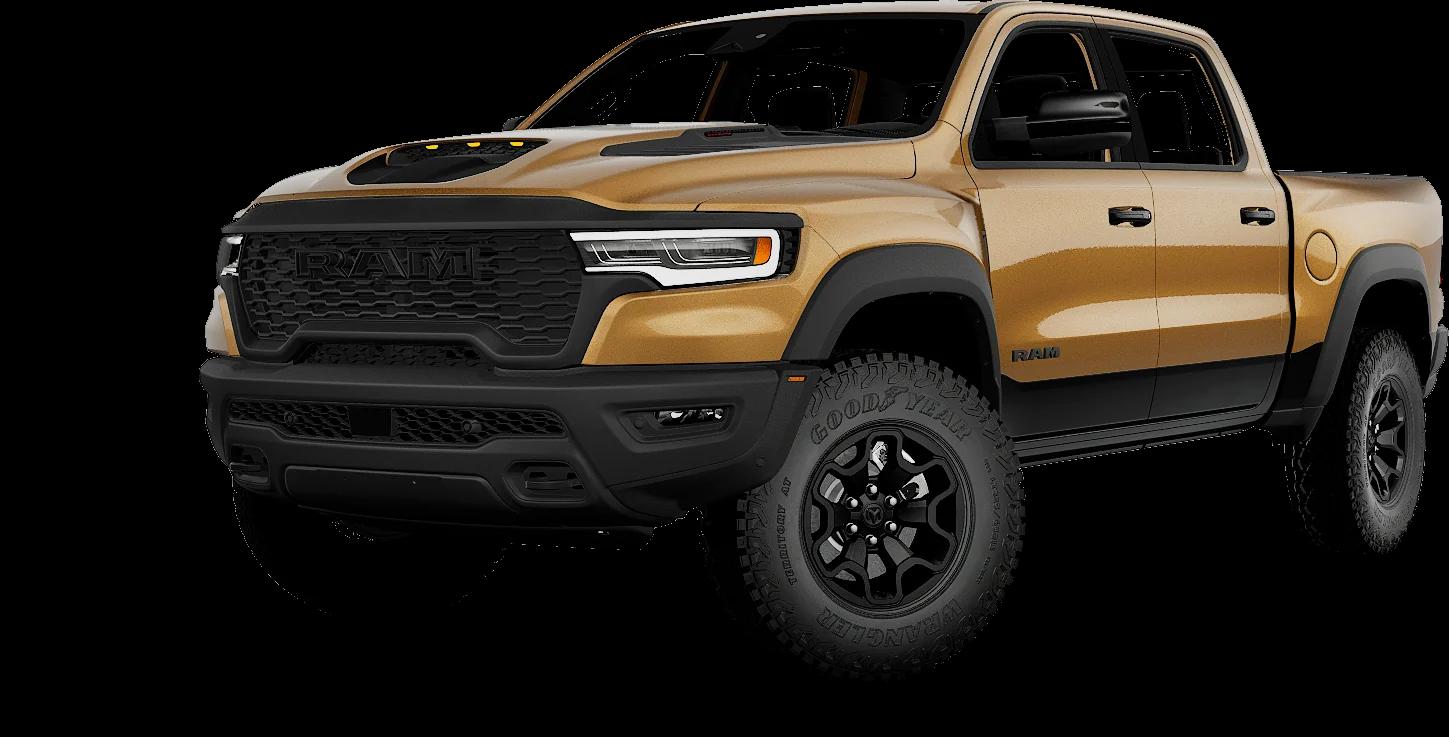
| Ram 1500 (air suspension) | Part-time or on-demand 4WD | Not listed | 6.7 in to 10.7 in | Not listed |
Jeep's ranges depend on tires and body style, so the best numbers go with the biggest tires on the most capable trims. The Cherokee figures are for the announced Trailhawk, which Jeep prices from $42,630 before destination, while the standard Cherokee starts at $35,130.
Wrangler and Gladiator: the obvious pair
The Wrangler is the most direct answer to a rough hollow. At 73.9 inches wide and 32.7 feet for a turning circle in two-door form, it fits where nothing bigger can. Jeep lists a maximum crawl ratio of up to 100:1 when properly equipped, and the Rubicon adds locking front and rear differentials and an electronic sway-bar disconnect. It starts at $47,130, and the Sport is the lowest priced at $36,635.
The Gladiator shares most of that hardware but is a longer truck. Its 137.3-inch wheelbase explains the lower 18.4-degree breakover at the bottom of Jeep's range, and its 44.5-foot turning circle means more three-point turns on a narrow road. In exchange you get a 60.3-inch bed for firewood, tools or a four-wheeler, and payload up to 1,720 pounds. The Rubicon, with Rock-Trac and a crawl ratio up to 77:1, starts at $55,700, while the Willys is $49,040.
Both are part-time systems on most trims. Command-Trac and Rock-Trac are built for loose or slippery surfaces, so use 4-High on snow and gravel and switch back to 2WD on dry pavement. Jeep lists towing at up to 3,500 pounds for most Wrangler four-doors (5,000 for the Rubicon with the right axle and tires), and between 4,500 and 7,700 pounds for the Gladiator depending on trim.
Ram 1500 and Rebel: a bigger truck on narrower roads
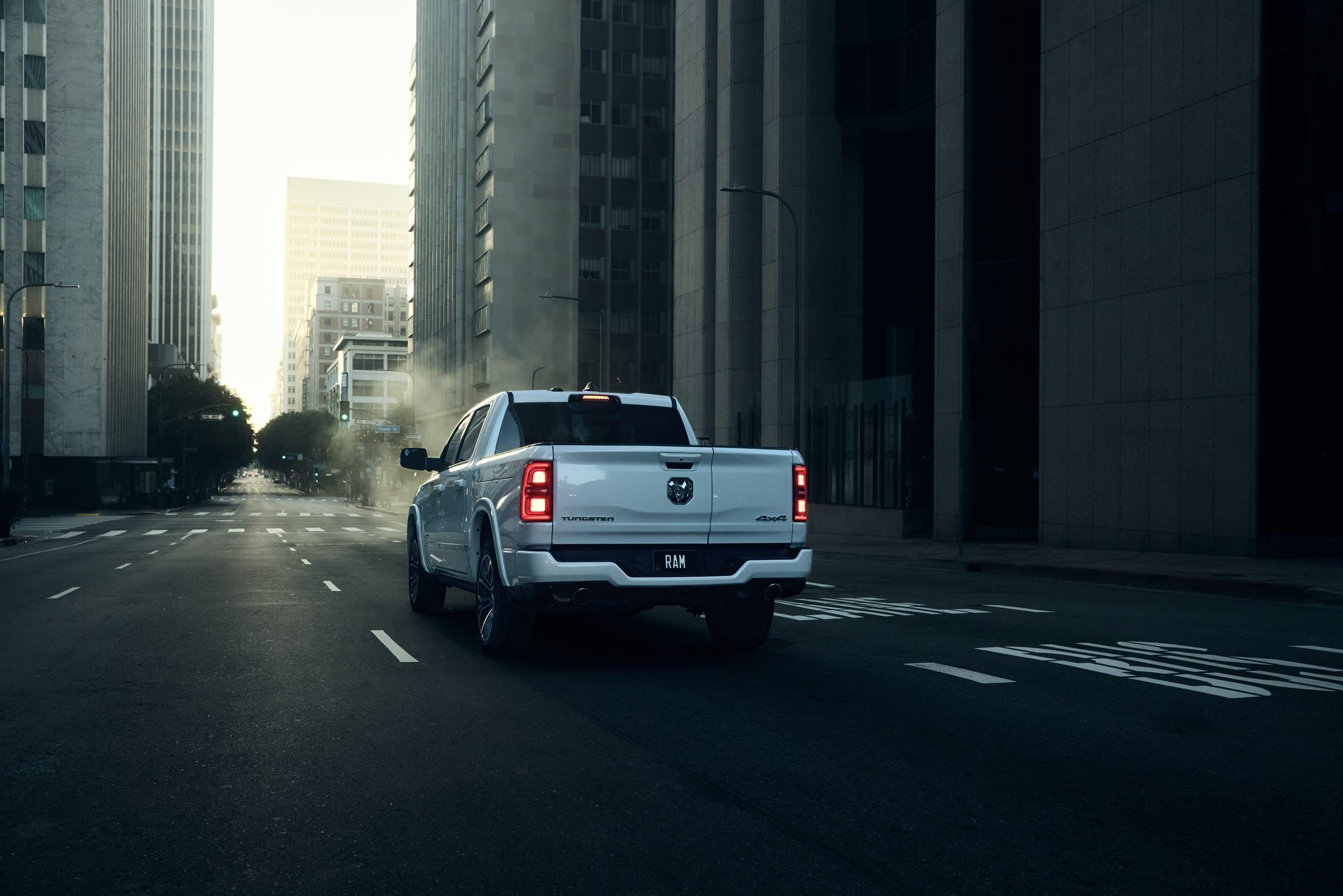
A full-size truck is common in mountain country, and for good reason: haul, tow and carry a crew. The Ram 1500 is 81.2 inches wide as standard and 88.0 inches on widebody trims, so check the road before you commit.
The Rebel, from $65,845, is the off-road pick. It pairs the 420-hp Hurricane Standard Output six with an Off-Road Group that lists an electronic-locking rear differential, raised ride height, skid plates, tow hooks and a full-size spare. The Warlock, from $53,415, is the cheaper way into that equipment, with the 3.6-liter V6 as standard. For other trims, the Off-Road Group is $1,345 to $1,895.
Air suspension adds flexibility. Ram lists clearance of 6.7 inches in Entry/Exit mode, 8.7 in Normal, 9.9 in Off Road 1 and 10.7 in Off Road 2, so you can lift the truck for a washed-out lane and lower it for a garage.
Power Wagon: when the road is the job
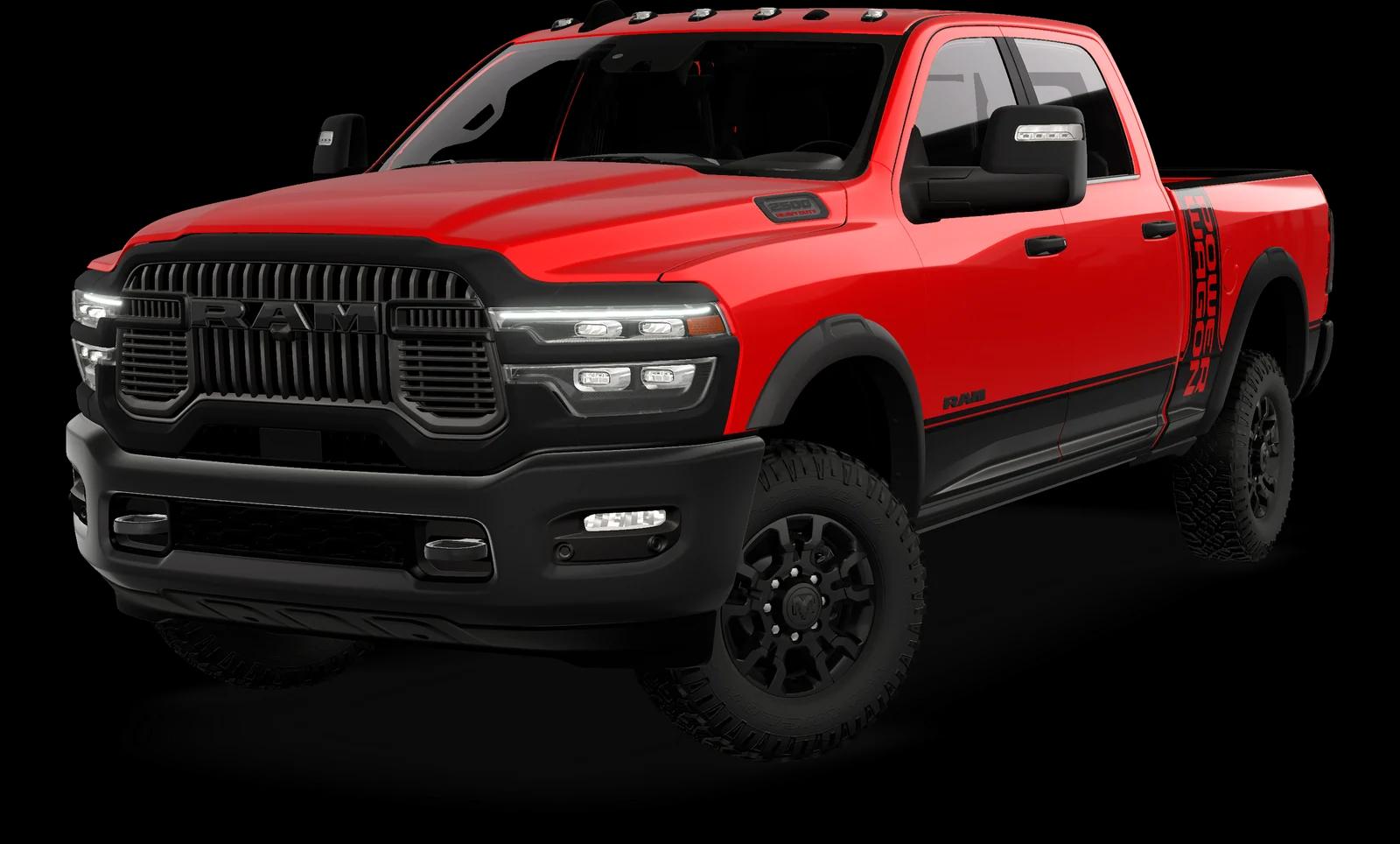
The 2500 Power Wagon, from $74,435, is the heavy option. Ram lists electronic-locking front and rear differentials, a disconnecting front sway bar, 34-inch all-terrain tires, hill descent control and a 4.10 axle. Clearance is up to 14.2 inches with the HEMI, and 13.2 with the diesel.
For 2027, the Power Wagon can be ordered with the 6.7-liter Cummins High-Output diesel, 430 hp and 1,075 lb-ft. Ram's preliminary maximums for the 2500 line are 17,740 pounds of towing with the HEMI and 20,000 with the diesel, and Ram says the diesel Power Wagon tows nearly 20,000. The standard 31-gallon tank gives the diesel about 600 miles of range, per Ram. That matters in places where the nearest diesel pump might be a long drive.
It is a big vehicle, though. For daily trips on a one-lane hollow road, a Wrangler may be easier to live with.
Engine braking, towing and winter on mountain two-lanes
Going down is harder than going up. On a long grade, let the engine and transmission share the work. Select a lower gear before the descent begins, and do not ride the brakes the whole way. Brakes that overheat fade, and fade arrives without warning. If your truck has a Tow drive mode, as the Ram 1500 Laramie does, read the owner's manual for how it handles downhill driving.
The Cherokee hybrid is a different tool. It tows 3,500 pounds, fords 24 inches of water when properly equipped, and returns 33 city, 29 highway and 31 combined mpg in Trailhawk form. Jeep says the battery recharges through braking, which is useful on long descents. It is a sensible pick for gravel driveways and light trailers, not for a logging road.
For winter, shaded curves and bridge decks ice first. Four-wheel drive gets you up a hill but does nothing for stopping, so winter tires matter as much here as anywhere. Check the state transportation department's road-condition information before you leave, carry a shovel and a charged phone, and tell someone your route.
For an ATV or side-by-side weekend, add up the weight of the machine, the trailer and the gear before you compare it to a tow rating, then leave a margin. Follow the posted rules for the trail system you plan to ride; this guide does not cover them.