Buyer guide
Dodge Durango by Model Year: Engines, Towing, Oil and Maintenance
Durango engines, max trailer weight, oil capacity and grade, fuel octane, third-row details and service intervals for every model year from 2015 to 2027.
By the Great Lakes CDJR editorsUpdated November 8, 20268 min read
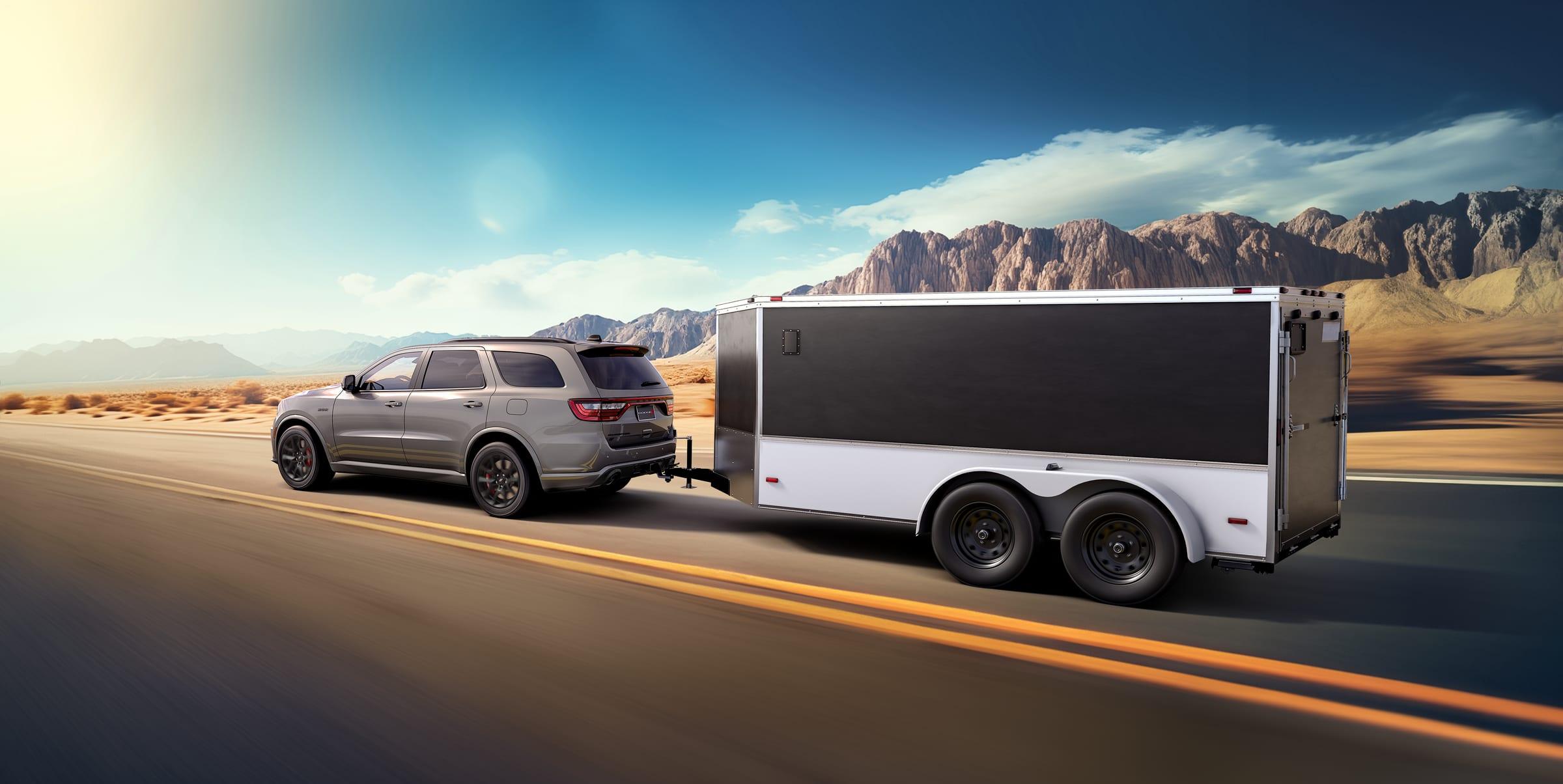
The short answers first. Across 2015 through 2027, the Durango's engine-oil capacity (with filter) is 6 quarts for the 3.6‑liter V6, 7 quarts for the 5.7‑liter HEMI and the 6.4‑liter (392) V8, and 8.3 quarts for the supercharged 6.2‑liter Hellcat. The maximum trailer weight in the factory spec sheets runs from 6,200 lb on the V6 to 8,700 lb on the 6.4, the Hellcat and the 5.7 with the Tow N Go package. That is a spread of 2,500 lb, worked out here from those two figures.
Everything below comes from the manufacturer's published spec sheets and maintenance schedules, collected on the Durango model hub. Where two sources disagree, the text says so. Used‑Durango shoppers around the Great Lakes will meet both rear-drive and all-wheel-drive rows in the tow charts, so confirm the drivetrain before trusting a number.
Engines by model year
The spec sheet lists these engines in each year. Output figures are the SAE J2723 numbers from the sheets, and several are labeled estimates.
| Year | Engines listed | What the sheet adds |
|---|---|---|
| 2015 | 3.6 V6, 5.7 V8 | V6 at 290 hp (SXT, Limited) or 295 hp (Rallye, Blacktop, Citadel) |
| 2016 | 3.6 V6, 5.7 V8 | V6 at 295 hp; sheet lists 290 lb‑ft of torque |
| 2017 | 3.6 V6, 5.7 V8 | V6 at 293 hp (single exhaust) or 295 hp (dual) |
| 2018 | 3.6, 5.7, 6.4 V8 (SRT) | First year the data lists the 6.4 |
| 2019 | 3.6, 5.7, 6.4 | Same three engines |
| 2020 | 3.6, 5.7, 6.4 | Same three engines |
| 2021 | 3.6, 5.7, 392, 6.2 Hellcat | First year the data lists the Hellcat |
| 2022 | 3.6, 5.7, 392 | No Hellcat in the sheet, tow data or feature chart |
| 2023 | 3.6, 5.7, 392, Hellcat | Hellcat listed again |
| 2024 | 3.6, 5.7, 392, Hellcat | 392 peak-power rpm shifts to 6,100 |
| 2025 | 3.6, 5.7, Hellcat | No 392 in the sheet; trims are GT, R/T, SRT Hellcat |
| 2026 | 3.6, 5.7, R/T 392, Hellcat | 392 returns as an R/T trim; GT HEMI trims appear |
| 2027 | 5.7, R/T 392, Hellcat | No 3.6 V6 in the sheet, tow data or trim list |
Output by engine, taken from the same sheets:
| Engine | Horsepower | Torque | Notes |
|---|---|---|---|
| 3.6‑liter Pentastar V6 | 290 to 295 hp (see table) | 260 lb‑ft | 2016 sheet says 290 lb‑ft; every other year says 260 |
| 5.7‑liter HEMI V8 | 360 hp at 5,150 rpm | 390 lb‑ft at 4,250 rpm | Unchanged 2015 to 2027 |
| 6.4‑liter / 392 HEMI V8 | 475 hp | 470 lb‑ft | Peaks at 6,000 and 4,300 rpm through 2023; 6,100 and 4,100 rpm in 2024 and later |
| Supercharged 6.2‑liter Hellcat V8 | 710 hp at 6,100 rpm | 645 lb‑ft | Torque peak at 4,300 rpm in 2021 and 2023, 4,800 rpm from 2024 |
All Durangos listed here use an eight-speed automatic. From 2018 the sheets name the unit: the V6 uses the 845TE (2018 to 2020) or 850RE (2021 on), the other non-Hellcat V8s use the 8HP70, and the Hellcat uses the 8HP95.
Towing capacity by year
These are maximum trailer weights in pounds from the sheets. The 2018, 2020, 2021, 2023 and 2024 sheets say in the table heading that the maximum needs the optional towing package; the other years carry no such heading in the data. The Durango rows hold trailer-weight figures only, with no GVWR, payload or GCWR values. For brand-wide comparisons, use the towing guides or the Durango towing page.
| Model years | 3.6 V6 | 5.7 V8 (AWD / RWD) | 5.7 with Tow N Go | 6.4 / 392 | 6.2 Hellcat |
|---|---|---|---|---|---|
| 2015 to 2017 | 6,200 | 7,200 / 7,400 | not listed | none | none |
| 2018 to 2020 | 6,200 | 7,200 / 7,400 | not listed | 8,700 | none |
| 2021, 2023, 2024 | 6,200 | 7,200 / 7,400 | 8,700 (AWD) | 8,700 | 8,700 |
| 2022 | 6,200 | 7,200 / 7,400 | 8,700 (AWD) | 8,700 | none |
| 2025 | 6,200 | 7,200 (AWD only) | 8,700 (AWD) | none | 8,700 |
| 2026 | 6,200 (RWD only) | 7,200 (AWD only) | 8,700 (AWD) | 8,700 | 8,700 |
| 2027 | none | 7,200 (AWD only) | 8,700 (AWD) | 8,700 | 8,700 |
Two things stand out. The 5.7 is the only engine with two AWD maximums: 7,200 lb without Tow N Go and 8,700 lb with it, a 1,500 lb difference. And a 2018 to 2020 5.7 shows no 8,700 lb row at all, so a package that lifts the rating in 2021 and later is not documented for those years.
The Tow N Go Package appears in the feature charts as optional on the R/T in 2021, 2022, 2023, 2024 and 2025, on the Citadel in 2024, and on the GT HEMI trims in 2026. The 2026 chart entry lists a Class IV hitch rated at 8,700 lb and an integrated trailer brake controller.
Oil capacity and grade by engine
Capacities below include the filter. Grades come from the fluids table for each year.
| Engine | Years | Oil with filter | Oil grade |
|---|---|---|---|
| 3.6 V6 | 2015 to 2027 (see note) | 6 qt | 5W‑20 in 2015; 0W‑20 in 2016 to 2025; 0W‑20 full synthetic or 5W‑20 in 2026 and 2027 (MS‑6395) |
| 5.7 HEMI | 2015 to 2027 | 7 qt | 5W‑20 in 2015 to 2021; 0W‑20 full synthetic in 2022 to 2025; 0W‑20 full synthetic or 5W‑20 in 2026 and 2027 |
| 6.4 / 392 | 2018 to 2024, 2026, 2027 | 7 qt | 0W‑40 synthetic, spec MS‑12633 |
| 6.2 Hellcat | 2021, 2023 to 2027 | 8.3 qt | 0W‑40 synthetic, factory fill Pennzoil Ultra |
Some gaps matter if you are matching oil to a specific year. The capacity table has no 6.4 row for 2020 through 2025, so those years take their 7 quarts from the spec sheet. The fluids table has no 392 or Hellcat oil row for 2020 through 2025, so those years rest on the sheet's factory-fill line. The 2015 V6 grade row (5W‑20) differs from the 0W‑20 listed from 2016 on. Note on 2027: its capacity and fluids tables still carry 3.6‑liter rows, though that year's sheet, tow data and trim list have no V6.
The oil-change schedule shows another split. The SRT schedules (2017 to 2020 and 2024 to 2027) call for an oil change with a new filter every 6,000 miles. The non-SRT schedules contain no oil-change row at all.
Coolant, fuel tank and other fluids
Cooling-system capacity, without and with the trailer-tow package where the data splits it:
| Engine | Cooling system |
|---|---|
| 3.6 V6 | 10.4 qt without tow package, 11 qt with |
| 5.7 HEMI | 15.4 qt without, 16 qt with |
| 6.2 Hellcat | 14.7 qt, plus 4.0 qt intercooler loop (2026 and 2027) |
| 6.4 / 392 | 14 qt in the spec sheets (2018 to 2024, 2026, 2027); 16 qt in the capacity tables (2018, 2019, 2026, 2027) |
The 6.4 numbers do not agree between sources, so treat 14 versus 16 quarts as an open question for that engine. Coolant type is the same in every year's fluids table: a 10-year or 150,000‑mile OAT formula, specification MS.90032.
The fuel tank is 24.6 gallons in every sheet from 2015 to 2027. The 2015 capacity table rounds it to 25 gal. For the 2024 and 2027 fluids tables, the transfer case takes ATF+4, the axles take SAE 75W‑85 GL-5 synthetic lubricant (with a friction modifier at an electronic limited-slip rear), the brake master cylinder takes DOT 3 fluid, and the transmission calls for ZF automatic fluid listed for 8- and 9‑speed units.
Fuel octane
| Engine | Years | Octane in the data |
|---|---|---|
| 3.6 V6 | 2015 to 2027 | 87 regular; premium gives no benefit in most years' notes |
| 5.7 HEMI | 2015 to 2025 | 87 acceptable, 89 recommended |
| 5.7 HEMI | 2026 and 2027 | 89 mid-grade listed as the fuel; the 2027 note says the engine is designed for 89 |
| 6.4 | 2018 to 2020 | 91 or higher required in the 2018 and 2019 fuel tables; the spec sheets (2018 to 2020) word it as recommended |
| 6.4 / 392 and 6.2 Hellcat | 2021 to 2027 | 91 or higher, premium required |
Ethanol limits changed too. 2015 allows up to 10% ethanol, with E85 only on a flex-fuel 3.6 V6. From 2016 on, the tables allow up to 15% and say not to use E85.
Third-row seating by year
The spec sheets list third-row legroom and the cargo space behind the third row in every year.
| Year | Third-row legroom (in.) | Cargo behind third row |
|---|---|---|
| 2015 | 31.5 | 17.2 cu ft |
| 2016 | 33.5 | 17.2 cu ft |
| 2017, 2018 | 31.5 | 17.2 cu ft |
| 2019 to 2027 | 33.5 | 17.2 cu ft |
Seat layout is where the buyer decisions are. For 2018 through 2020 the SRT came with 2/2/2 seating (two separate second-row seats), and the Lightweight Performance Package (optional on SRT in those years, then on the 392 and Hellcat through 2024) deletes the third row for five-passenger seating. In 2026 and 2027 the Hellcat comes as a five-seater unless the bench is added, and the R/T 392 is 2/2/2.
Service intervals that differ by engine
| Service | 3.6 V6 and 5.7 | SRT engines |
|---|---|---|
| Spark plugs | 100,000 mi, every year | 96,000 mi (2017 to 2020); 60,000 and 120,000 mi on the 6.2 supercharged (2024 to 2027; the 2026 and 2027 rows also name the 6.4) |
| Engine air cleaner filter | Replace at 30,000 mi | Replace at 30,000 mi; inspect at 12,000 mi in dusty or off-road use |
| Coolant | 10 years or 150,000 mi | Replace at 120 months if not done at 150,000 mi |
| Oil and filter | None listed | Every 6,000 mi |
The transfer-case plans differ by year. The 2024 plan says to drain and refill it at 30,000 miles, while the 2021 plan says to inspect it at 30,000 and change it at 120,000. Lug nuts are 130 ft‑lb on base models and 110 ft‑lb on the SRT (2018, 2019, 2026, 2027), thread M14 x 1.50, 22 mm socket.
How to check your own Durango
Your Durango's VIN points to an engine through the VIN decoder. From there, open that year's page for the maintenance and fluids rows quoted above, or use the specs explorer to set 2023 to 2027 configurations side by side.